Melt shops today face rising raw material costs, tighter quality requirements, and increasing pressure to operate efficiently. While many metal-casters talk about digitalisation and Industry 4.0, very few understand what melt shop digitalisation means, or how to implement it successfully.
The truth is, digitalising a melt shop is not only possible, but also quickly becoming essential for cost control and long-term competitiveness.
Why Melt Shop Digitalisation Matters
The melt shop is the cost and quality backbone of every metal-casting industry. Decisions made here directly impact:
⦁ Raw material and alloy costs
⦁ Chemistry consistency and rejections
⦁ Power consumption and yield
Most melt shops still depend on manual calculations, spreadsheets, and operator judgement. As alloy complexity increases, these methods lead to inconsistency, higher costs, and avoidable losses. Digitalisation replaces guesswork with real-time, data-driven decisions.
What Does Digitalising a Melt Shop Really Mean?
True melt shop digitalisation is not just data collection or ERP implementation. It means:
⦁ Automatically calculating the least-cost charge mix
⦁ Controlling chemistry heat-to-heat
⦁ Providing real-time visibility to operators and managers
⦁ Reducing dependency on individual operators
⦁ Using data to continuously optimise operations
⦁ This is where specialised melt shop optimisation software becomes critical.
Key Tools Required to Digitalise a Melt Shop
1. Charge Mix Optimisation
Optimisation software uses mathematical models to determine the lowest-cost charge recipe while meeting all chemistry and operational constraints, significantly reducing alloy and correction costs.
2. Real-Time Melt Shop Visibility
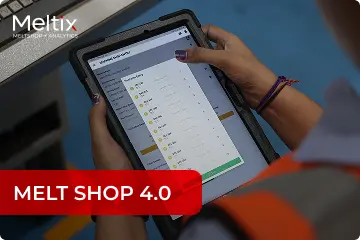
Operators need a single-screen, live view of heats, chemistry status, furnace activity, and deviations. Without real-time visibility, digital data has limited value.
3. Shop-Floor Integration
Integration with spectrometers, furnaces, and weighing systems ensures accurate, real-time data without manual entry.
Common Mistakes Metal-Casters Make
⦁ Assuming this as a replacement of melter.
⦁ Recording data without using it for optimisation
⦁ Overcomplicating the first phase of digitalisation
⦁ Ignoring operator usability and adoption
⦁ Successful digitalisation starts simple, delivers quick ROI, and scales gradually.
How Meltix Helps Digitalise the Melt Shop
Meltix is purpose-built for melt shop optimisation, not generic reporting.
⦁ Cost Reduction: Generates least-cost charge recipes using advanced optimisation algorithms
⦁ Quality Improvement: Reduces chemistry variation and improves first-time-right heats
⦁ Operational Efficiency: LIVEVIEW dashboards and automation reduce manual effort and delays
⦁ Data-Driven Decisions: Turns melt shop data into actionable insights for continuous improvement
Most metal-casters begin seeing measurable results within 3–4 weeks of implementation.
Final Thoughts
Melt shop digitalisation is no longer optional. Metal-casting industries that adopt optimisation-driven tools gain better cost control, consistent quality, and operational confidence. Those who delay risk falling behind.
Meltix enables metal-casting industry to move from manual judgment to intelligent, data-driven melt shops, one heat at a time.